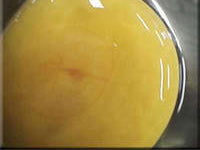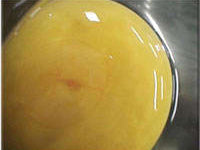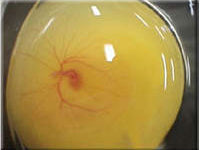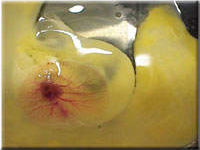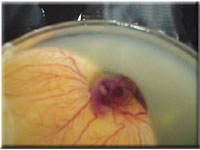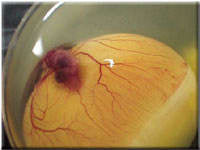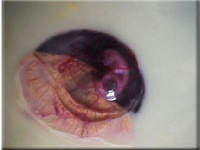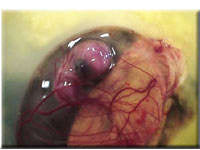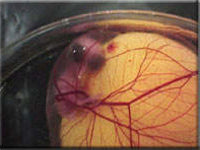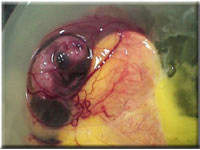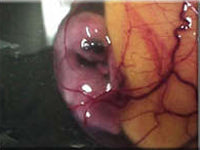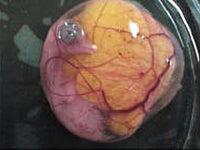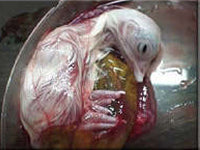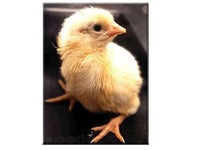
Egg Candling (Day 1–21)

Tap play to watch the full candling cycle.

Candling eggs: the fascination of watching a speck grow into a chick

Candling eggs as the embryo develops is one of the most exciting parts of incubating and hatching your own chicks.

The history of candling

Talk to older people who used to hatch their own chicks, and they will tell you it is called “candling” because it was originally done using a candle. The incubated egg was held over the flame in a darkened room, allowing the person to see through the shell.

Perfect? No, not really.

The problem with using a candle is that it is unstable and extremely hot. The last thing you want to do with a fertile egg is accidentally cook it. Because of these drawbacks, candles are no longer used in modern hatching.

Enter the flashlight.

Flashlights were definitely a step in the right direction. They are far more stable and do not produce excessive heat. Even today, it is perfectly possible to candle eggs using a small flashlight. You simply need a strong light — halogen bulbs work well — along with either a homemade box or your hand formed into a fist.

In the fist method, the light is held inside your closed hand with the bulb near the top, and the egg is balanced on the clenched fist. The advantages of this method are that it is inexpensive and very simple.

If you choose to use a flashlight, make sure it has a strong light source, preferably an LED. Small LED flashlights are inexpensive and ideal for candling. A second handheld option is using a flashlight app on a smartphone.

How to candle

Why is candling important?

There are four main reasons:
• To ensure eggs are the best possible quality before they go into the incubator.
• To observe embryo development throughout the 21 days of incubation.
• To identify and remove eggs that are not developing before they spoil or explode and contaminate the incubator with bacteria.
• To analyze potential problems if you experience a poor hatch rate.

Will candling tell me whether an egg is fertile before incubation?

No.

The only way to determine whether an egg is fertile — without breaking the shell — is by incubating it for six or seven days. When candled at this stage, a fertile egg will show a small developing embryo along with spider-like veins.

How often should I candle?

• Candling eggs before placing them in the incubator is always a good idea.
• Once the eggs are set, daily candling is not recommended, even though it can be tempting — especially if children are involved. Accidents can happen, so it is best to limit handling.
• Candling between day 5 and day 7 is ideal for identifying developing eggs. At this stage, mark those that do not appear to be developing.
• On day 10, re-candle the eggs you marked earlier. If they still show no signs of development, remove them from the incubator.
• On day 17, candle all eggs again to ensure none have stopped developing. Remove any that show signs of failure.
• Leaving undeveloped or failed eggs in the incubator can cause them to explode and spread bacteria, which can infect healthy embryos and reduce hatch success.

How do I know what I am looking for?

If you are new to candling, it can be difficult to judge whether what you are seeing is normal. A step-by-step hatching guide with photos and videos can be very helpful when learning what to expect at each stage.

Does it matter which way up the egg is when I candle?

It is best to keep the pointed end of the egg facing downward. Occasionally candling with the blunt end down can give a clearer view of the embryo, but this increases the risk of damage, particularly during the first two weeks.

Important note: Fertile eggs should always be stored and incubated with the pointed end facing downward.

Does moving the egg during candling damage it?

No, as long as you handle the egg carefully and avoid candling after day 18 of incubation. Gentle rotation is often necessary to see inside the egg, especially in later stages. Always move slowly and carefully.

How long should the egg be out of the incubator?

As little time as possible. If you are simply checking whether the egg is damaged or developing, candling should only take a few minutes. If children are involved, the process may take longer, but eggs should ideally be returned to the incubator within 20 to 30 minutes.

Candling the eggs

Set up your candling equipment in a dark room close to the incubator. Select one egg at a time and hold it above the light.

Correct method:
• Place the larger end of the egg (where the air cell is located) directly against the light.
• Hold the egg gently between your thumb and forefinger.
• Tilt and rotate the egg slowly until you achieve the best view.

As you work, number each egg and take notes on what you observe. This allows you to compare findings between candling sessions.

Work efficiently, but not so quickly that you risk dropping the egg. Returning eggs to the incubator within 20 to 30 minutes poses no risk to development. A broody hen regularly leaves her eggs for short periods during incubation.

Be aware that brown or speckled eggs are harder to candle because darker shells are less transparent.

Signs that the egg is a winner

A “winner” is an egg with a successfully developing embryo. Signs include:
• A visible network of blood vessels spreading from the center outward.
• With weaker light, a clear lower half (air cell) and a darker upper half (embryo).
• With stronger light, the dark outline of the embryo may be visible, particularly the eyes, which appear as the darkest spots.
• In some cases, you may even see the embryo moving.

Signs that the egg is a quitter

A “quitter” is an embryo that has stopped developing. Causes may include poor temperature or humidity control, bacterial contamination, or genetic issues.

Signs include:
• A blood ring — a clearly defined red circle inside the shell — formed when blood vessels detach after embryo death.
• Blood spots or streaks, which can be difficult to distinguish from normal development in early stages.

If you are certain an egg is a quitter, remove it immediately to prevent spoilage or explosion inside the incubator.

Signs that the egg is a yolker

A “yolker” is an unfertilized egg with no chance of developing an embryo. Indicators include:
• The egg looks the same as it did before incubation.
• The interior appears clear, with no dark spots, veins, or blood rings.

If you are unsure, leave the eggs alone

If you suspect an egg may be a yolker or quitter but are not completely certain, do not discard it immediately.

• Mark questionable eggs and return them to the incubator.
• Recheck them on day 14.
• If no development is visible or a blood ring has formed, the egg can then be safely removed.

Day 3

Egg candling view on day 3

Day 4

Egg candling view on day 4

Day 5

Egg candling view on day 5

Day 6

Egg candling view on day 6

Day 7

Egg candling view on day 7

Day 8

Egg candling day

Day 9

Egg candling view on day 9

Day 10

Egg candling view on day 10

Day 11

Egg candling view on day 11

Day 12

Egg candling view on day 12

Day 13

Egg candling view on day 13

Day 14

Egg candling view on day 14

Day 15

Egg candling view on day 15

Day 16

Egg candling view on day 16

Day 17

Egg candling view on day 17

Day 18

Egg candling view on day 18

Day 19

Egg candling day

Day 20

Egg candling view on day 20

Day 21

Egg candling view on day 21